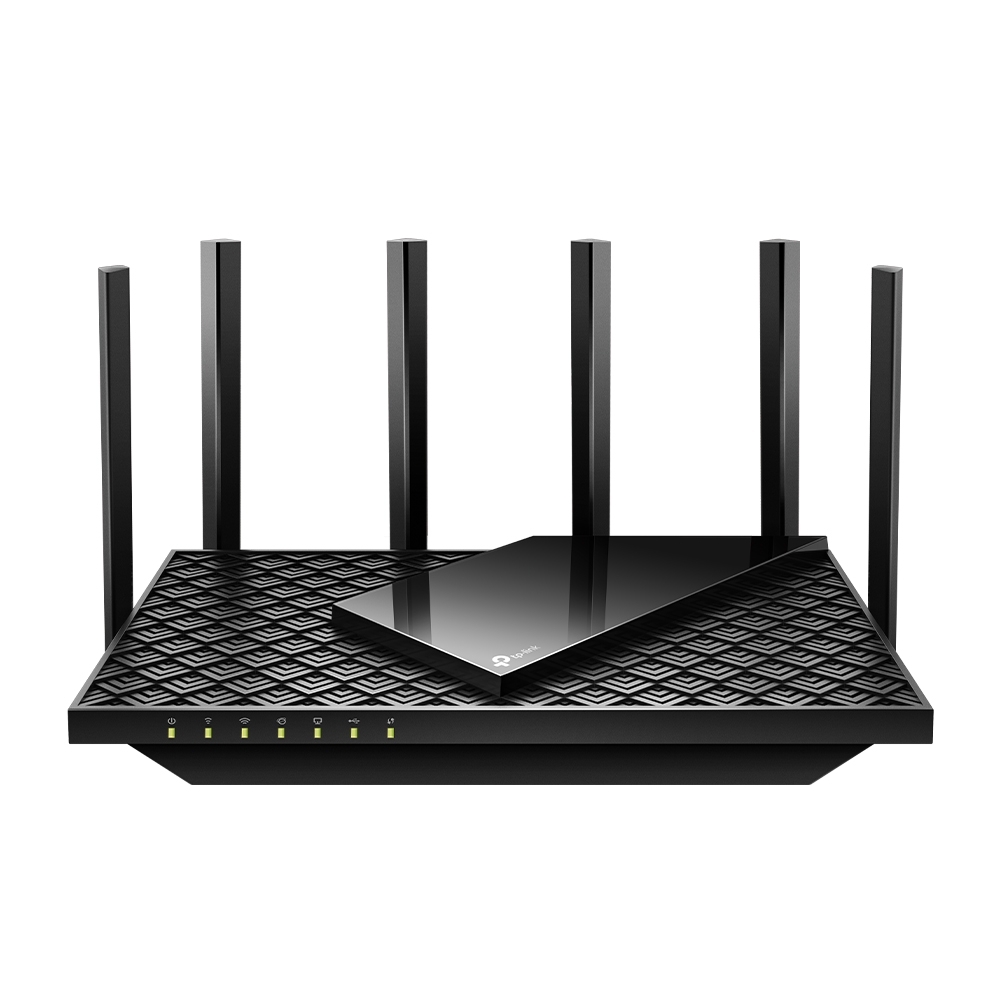
Networking powerhouse TP-Link has officially launched two revolutionary Wi-Fi 7 routers, the Archer BE5100 and Archer BE3600, exclusively in the Chinese market. This introduction signals a massive shift in consumer connectivity, not just for the technological leap to 802.11be, but specifically because of the unprecedented, aggressively low price points that threaten to rapidly accelerate the global transition away from previous Wi-Fi standards.
The arrival of Wi-Fi 7 is predicated on delivering substantially improved performance, crucial for the increasing demands of high-density environments and low-latency applications like VR and cloud gaming. Key features include the utilization of 320 MHz channels—doubling the bandwidth of Wi-Fi 6E—and the introduction of Multi-Link Operation (MLO), which allows devices to simultaneously transmit data across different frequency bands (2.4 GHz, 5 GHz, and 6 GHz), effectively maximizing speed and minimizing packet loss.
Leading the charge is the Archer BE5100, positioned as the high-end option among the pair. This router leverages a tri-band architecture, delivering an aggregate maximum theoretical throughput of 5.1 Gbps. Critically, to ensure that the wired infrastructure can keep pace with the exponential wireless speeds, the BE5100 is equipped with two 2.5 Gigabit Ethernet ports—one configured for WAN/LAN duties and the other strictly for high-speed LAN connections. This hardware choice ensures consumers can fully utilize gigabit and multi-gigabit fiber connections without being bottlenecked by traditional 1.0 Gbps ports.
The entry-level Archer BE3600, while slightly less powerful, maintains an exceptionally high value proposition. Operating on a dual-band setup, it achieves a combined maximum speed of 3.6 Gbps. Notably, TP-Link decided not to compromise on the crucial wired capabilities, equipping the BE3600 with the exact same dual 2.5 Gigabit Ethernet port configuration as its more expensive sibling. For the mainstream user, this capability ensures readiness for current and future residential ISP upgrades.
The true disruption lies in the pricing strategy. Launching these models at roughly $70 for the BE5100 and $48 for the BE3600 (based on conversion from local currency) sets an aggressive global benchmark for Wi-Fi 7 affordability. This move severely undercuts existing Wi-Fi 6E mesh systems and positions the next-generation standard as immediately accessible to the mass market, pressuring competing networking OEMs to dramatically reconsider their product tiering and pricing structures to maintain relevance in the high-speed communications space.